
THE HIDDEN REASON HEALTH IS SHIFTING INTO THE HOME
For much of modern history, wellness lived somewhere else.
People left home to find it in clinics, retreats, spas, and medical offices. Health was something stepped into temporarily, addressed in appointments, and then returned from, while daily life itself remained largely unchanged.
That separation is now dissolving.
Not because medicine has failed, but because our understanding of how the body ages has matured.
Longevity science increasingly points to a simple and often inconvenient truth: the body is shaped far more by what happens every day than by what happens occasionally.
Ten minutes of daily nervous system regulation can have more impact than a quarterly intervention. Consistent, restorative sleep outweighs most corrective treatments. Chronic low-grade stress ages the body faster than acute events ever could.
Aging, it turns out, is not dramatic.
It is cumulative.
This realization has quietly shifted where wellbeing truly belongs.
Modern research in preventive medicine and neurobiology shows that the most powerful drivers of biological aging are environmental. Disrupted circadian rhythms, poor sleep quality, constant sensory stimulation, and lack of recovery states all compound over time. These are not problems clinics can solve alone, because they are not episodic.
They are embedded in daily life.
As a result, the idea of treatment is evolving.
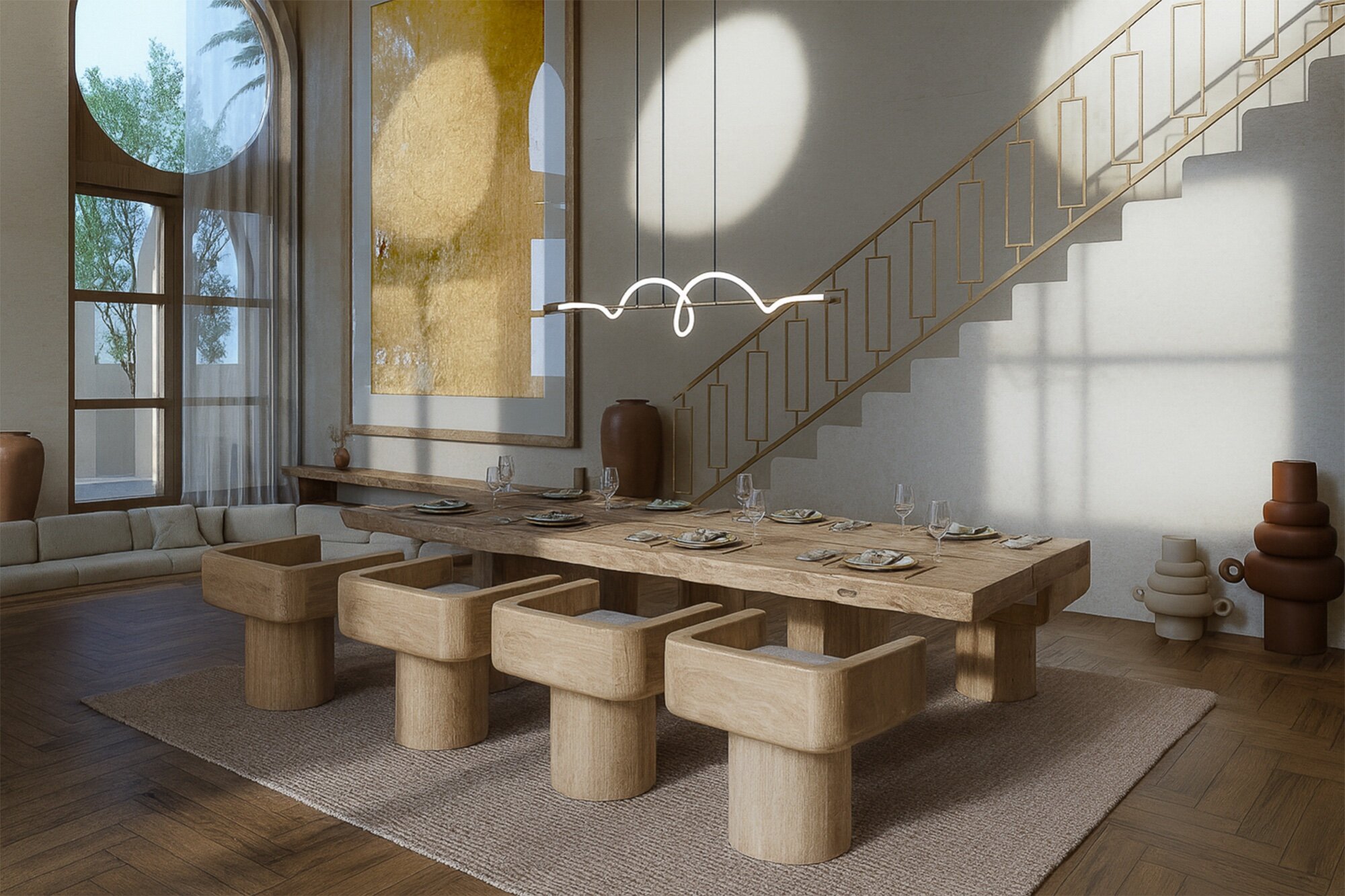
Dining Room, Los Arcos - The Genesis Collection, Riviera Maya, Mexico.
Wellness is no longer defined only by what we do to the body, but by what we stop asking it to tolerate. Instead of correcting imbalance after it appears, environments are increasingly designed to reduce the conditions that create imbalance in the first place.
This is where at-home wellness emerges, not as luxury and not as medicalization of domestic life, but as continuity.
The nervous system does not recognize appointments.
It recognizes patterns.
Light that follows a natural rhythm throughout the day. Sound that softens as evening approaches. Temperature that shifts gently rather than abruptly. Spaces that allow the body to move, pause, and recover without effort.
These elements regulate the autonomic nervous system hour by hour, long before symptoms ever appear.
Studies in longevity and stress physiology consistently show that chronic sympathetic activation, the body’s constant “on” state, accelerates cellular aging, inflammation, and hormonal disruption. The body repairs itself most effectively when it regularly returns to parasympathetic dominance, the state of rest, digestion, and recovery.
This state cannot be forced.
It must be supported.
This is why the most forward-thinking wellness approaches now focus on conditions rather than interventions. On shaping daily environments so regulation becomes passive rather than performative.
Cold and heat exposure, for example, are no longer viewed only as extreme practices reserved for athletes or retreats. Research shows that gentle, consistent exposure, even when brief, improves mitochondrial efficiency, immune resilience, and nervous system flexibility. What matters most is not intensity, but regularity.
Movement is also being reframed.
Not exercise as optimization or output, but movement as circulation. Walking, stretching, shifting positions, and transitioning between states throughout the day. Environments that naturally invite movement support joint health, metabolic function, and mental clarity without discipline or strain.
Sleep, perhaps the most powerful longevity factor of all, sits at the center of this shift.
Deep, uninterrupted sleep is strongly correlated with slower biological aging, improved memory, emotional stability, and immune repair. Yet sleep quality is determined long before the body reaches the bed. It is shaped by daytime light exposure, evening stimulation levels, temperature patterns, and overall nervous system load.
When daily life supports regulation, sleep follows naturally.
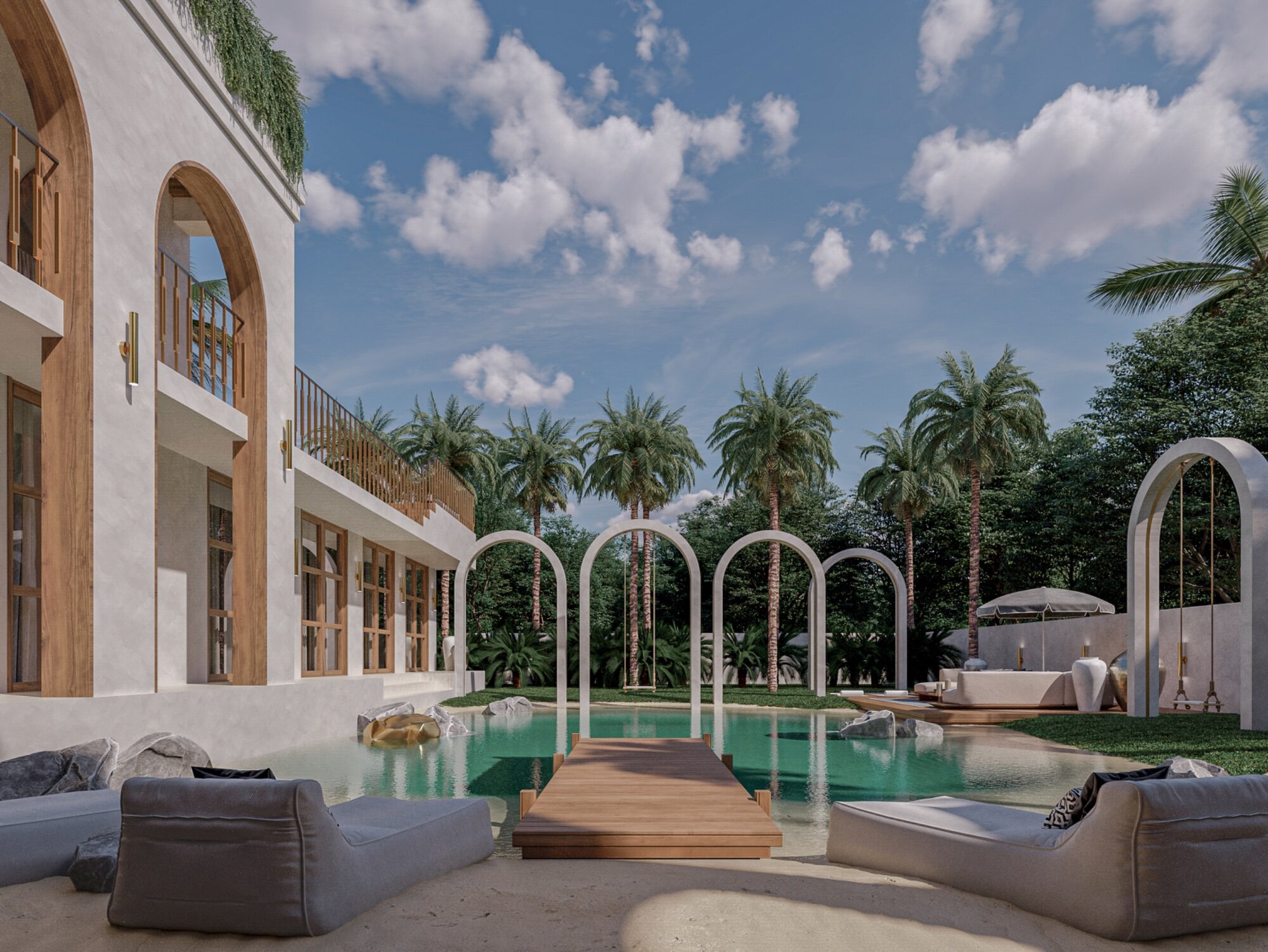
Los Arcos, L'TOPIA - The Genesis Collection, Riviera Maya, Mexico
When it does not, no supplement can fully compensate.
This is why at-home wellness is not about recreating clinics or installing treatments.
It is about designing life so the body spends less time compensating and more time repairing.
The most effective “treatments” are often invisible.
They are felt as ease. As steadier energy. As sleep that arrives without negotiation. As mornings that begin without resistance.
Over time, these effects compound.
Inflammation lowers. Hormonal rhythms stabilize. Cognitive fatigue softens.
The body ages more slowly not because it is optimized, but because it is no longer under constant strain.
This marks a profound shift in how longevity is understood.
Aging well is no longer something scheduled.
It is something inhabited.
When daily environments support regulation, wellbeing becomes continuous rather than corrective.
Health is not chased. It is maintained quietly, through alignment.
The future of wellness is not louder or more complex.
It is calmer.
More precise.
And increasingly, closer to home.

REQUEST Private ACCESS TO the Collection
An invitation to explore L’TOPIA beyond imagery. Leave your details and our team will personally connect to guide you through the residences, lifestyle, and long-term vision.